

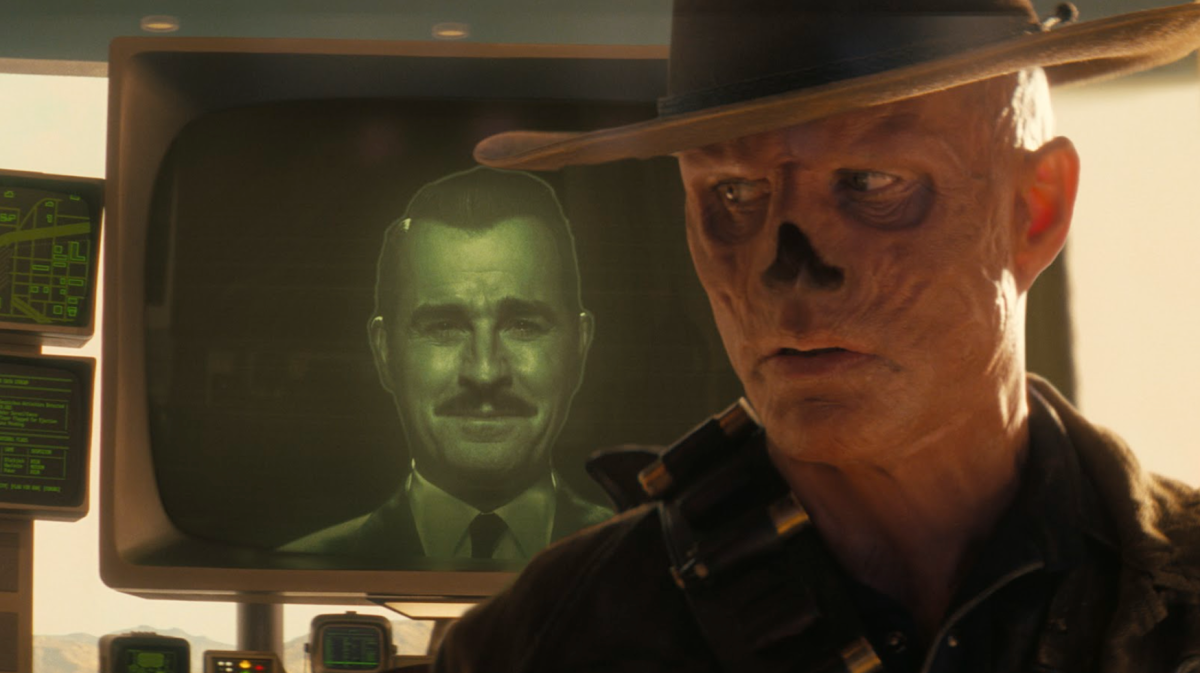
When it comes to video game adaptations, few shows have earned as much respect as “Fallout.” After a strong first season, the pressure was on for season two to prove the series was more than a one-time success. Set largely in the legendary New Vegas and the surrounding Mojave Wasteland, the new season expands the world, raises the stakes and leans deeper into the franchise’s dark humor and violence. While it does not always stay focused, “Fallout” season two proves the show is here to stay.
The season follows Lucy and the Ghoul as they travel through the Mojave Wasteland in pursuit of Hank, who fled at the end of season one’s finale with dangerous secrets about Vault-Tec’s role in the apocalypse. The wasteland is filled with danger, corruption and moral gray areas, from warring factions to brutal desert survival. New Vegas is recreated with incredible attention to detail, capturing the neon glow, decay and lawlessness fans recognize from the games. The setting feels alive and overwhelming, constantly reminding viewers that survival in this world is never simple.
Actor Walton Goggins continues to be the strongest part of the show. His performance as Cooper Howard, both before and after the bombs fall, gives the series its emotional backbone. As the Ghoul, Goggins balances cruelty, sarcasm and unexpected empathy. His ongoing search for answers about his missing family adds another layer of pain beneath the violence and dark comedy, making the character far more compelling than a typical antihero.
Actress Ella Purnell’s Lucy grows significantly in season two. Gone is much of her Vault-raised innocence, replaced by a tougher, more realistic outlook on the wasteland. However, she still struggles to hold onto her morals, which creates some of the season’s most interesting moments. Her relationship with the Ghoul develops into a sharp, often funny dynamic that highlights the show’s best writing, even as they uncover more disturbing truths about Vault-Tec and the world that was lost.
Visually, season two is a major achievement. The production design fully commits to the “Fallout” aesthetic, from the streets of New Vegas to the vast emptiness of the desert. Iconic elements from the games, including Deathclaws, are introduced in a way that feels earned rather than forced. Larger conflicts, such as the brewing war between the New California Republic and Caesar’s Legion, help the world-building feel detailed and confident, giving the universe a true sense of scale.
That said, the season is not without problems. With only eight episodes, the story tries to do too much. Several subplots compete for attention, including Norm’s investigation into the secrets of Vault 31. Not all of the subplots are worth the time spent on them. The Vault-related storylines, in particular, feel slow and disconnected compared to the more intense conflicts unfolding in the Wasteland.
The pacing also becomes an issue as the season moves toward its finale. Instead of delivering a clean conclusion, the story often feels like it is setting up a third season, and the rise of the Enclave. While this approach builds anticipation, especially surrounding Lucy’s dad Hank, played by actor Kyle MacLachlan, it leaves questions that viewers will not find out the answer to until the release of the third season next year.
Still, “Fallout” season two is remarkable and sticks well to the source material, making it feel rather nostalgic. It makes viewers want to grab an ice cold Nuka Cola and replay “Fallout: New Vegas.” Overall, I give the season a 9.5/10, and I cannot wait to see how season three plays out.